
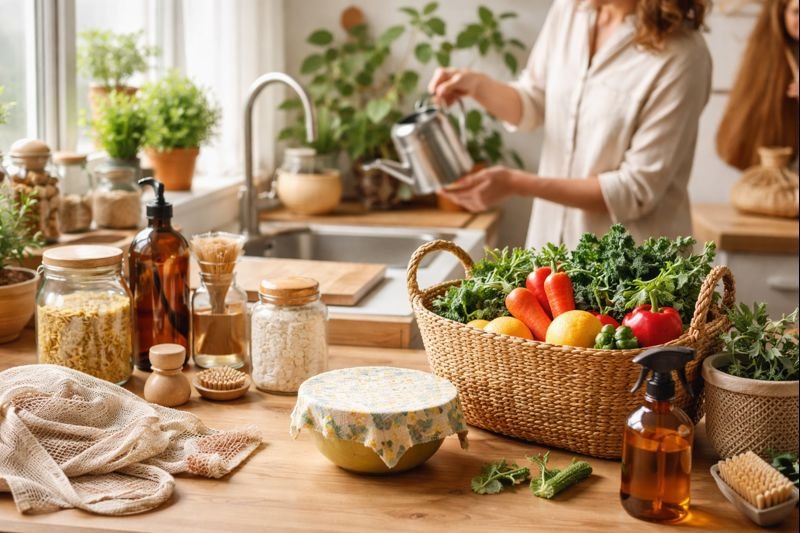
Living sustainably didn’t happen overnight for us. A few years ago, our home looked like many American households, overflowing recycling bins, occasional food waste, and no real plan for cutting utility costs or plastic use. In 2026, sustainability still feels daunting for many people, but what changed for us was adopting habit stacking, pairing small, eco-friendly actions with routines we already had.
We weren’t perfect, and we certainly didn’t start with every green trend out there. What worked was choosing a couple of changes, sticking with them, and building on those wins. Over time, those small habits like mindful water use during morning routines or switching lightbulbs added up into meaningful environmental and financial benefits.
Making the Kitchen & Dining Eco-Friendly
Our kitchen became the first real test of habit stacking. Meals are at the center of daily life, so this space offered the biggest opportunity for change. We began by planning a handful of meals each week, usually 3-4, and that simple step cut impulsive grocery buys and food waste. We weren’t trying to be perfect, just more intentional about what we bought and cooked.
One of the biggest wins was ditching single-use bottled water. Using a high-quality filter at the tap for cooking and drinking eliminated dozens of plastic bottles from our waste stream every month. We also swapped plastic wrap and disposable bags for reusable beeswax wraps, silicone lids, and glass containers, and our food stayed fresh just as long, if not longer.
We also introduced a small compost setup for kitchen scraps. At first, it felt like an extra chore, but the trick was tying it to something we already did, scraping plates after dinner. Separating wet (organic) from dry waste became second nature, and the resulting compost enriched our small backyard garden.
Energy-Saving Rituals That Became Normal
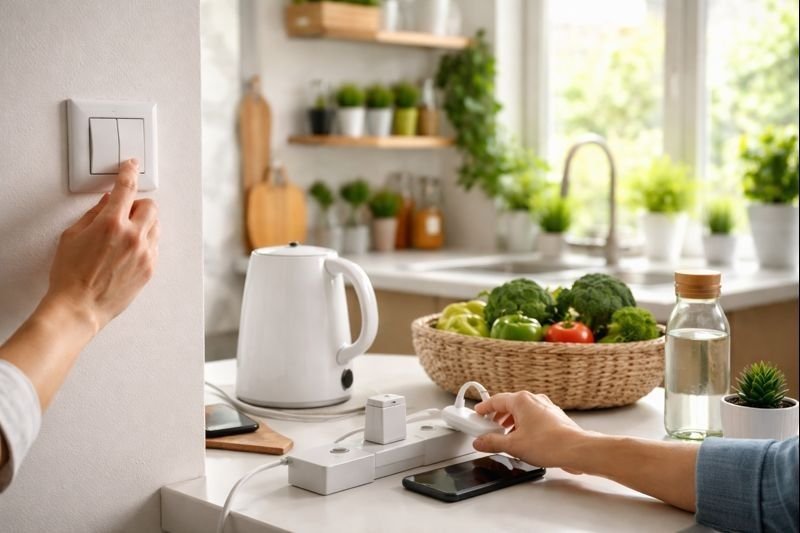
In the US, where utility costs can be a significant part of household expenses, focusing on energy savings paid off quickly. We started with the easiest wins: unplugging devices and chargers when they weren’t in use. This cuts down on what energy experts call “phantom load,” the wasted power that trickles into electronics even when they’re off.
Replacing traditional bulbs with LED lighting was another shift that didn’t disrupt our routines but made a measurable difference. LEDs use around 75-80% less energy and last far longer, which lowers our energy use and saves money on replacements.
Laundry also became an opportunity for sustainability. Washing clothes in cold water became our new default. Not only did clothes come out clean, but we used about 75% less energy per load. And in cooler months, instead of immediately cranking up the thermostat, we layered clothing, a habit that felt surprisingly cozy and intentionally mindful.
Water Conservation That Fits Daily Routines
We realized that water use was another area where habit stacking could make an impact without friction. Shortening showers by just one minute was a tiny change, but it saved several liters of water a day. Turning off the tap while brushing teeth or scrubbing dishes became an automatic part of our morning and evening routines.
Simple fixtures like low-flow showerheads and faucet aerators were small investments that made a big difference in overall water consumption. Once installed, we didn’t have to think about them; they quietly did the work for us while we went about our day.
Personal Care & Mindful Consumption

Sustainable living isn’t just about what we do in the kitchen or laundry room. It extends to personal care and daily habits outside the home. We shifted to solid shampoo and soap bars, cutting plastic bottle waste significantly. Replacing paper towels and disposable tissues with washable cloth napkins made from old clothing pushed us to rethink convenience versus waste.
One practice that reshaped our mindset was the 30-day “wish list” rule. Before any unplanned purchase, we’d wait a full month to see if the desire really lasted. This didn’t stop every purchase, but it cut down impulsive buys and encouraged us to think more about durability, usefulness, and long-term value.
When items did break, our first instinct became “can this be repaired?” We found local repair shops for electronics and clothing, and turned to online tutorials when it made sense.
Self-Care as Sustainability
It might sound unusual, but sustainability and self-care intersected in our home in meaningful ways. We experimented with a digital detox in the first 20–30 minutes of the day, which reduced stress and our early-morning screen time energy use. It became a moment of clarity and intent before the busyness of family life took over.
We also introduced micro-movement breaks, very short bursts of activity like stretches or air squats every hour, which kept us energized without relying on high-energy gym equipment or scheduled workouts. This tiny habit supported our health and reduced the need for driving to exercise classes or using energy-intensive machines at home.
Small Tips That Add Up
Here’s a quick, practical list we often shared with friends because they were simple to remember and adopt:
- Plan a few meals each week to cut waste and unnecessary grocery trips
- Use filtered tap water for cooking and drinks instead of bottled water
- Swap to LED bulbs and unplug unused devices
- Wash laundry in cold water whenever possible
- Take slightly shorter showers and install low-flow fixtures
These aren’t dramatic changes, and they didn’t require lifestyle overhauls, just consistency.
Frequently Asked Questions (FAQs)
1. What are the easiest sustainable lifestyle habits for beginners?
The easiest habits include reducing single-use plastics, planning meals to cut food waste, switching to LED bulbs, and unplugging unused electronics. These fit into routines many Americans already have without dramatic change.
2. How can sustainable living save money in everyday life?
Sustainable habits like cold-water laundry, energy-efficient lighting, and mindful grocery planning reduce utility bills and grocery costs.
3. Can sustainable habits improve personal health too?
Yes. Practices like reducing screen time, incorporating micro-movement breaks, and choosing whole foods align both with sustainability goals and personal well-being by lowering stress and encouraging physical activity.
4. How do you stay motivated to maintain sustainable habits?
Focusing on small wins, tracking savings, celebrating progress, and building habits into existing routines helps maintain motivation.
Final Thoughts
Transitioning to sustainable lifestyle habits in everyday life doesn’t require dramatic shifts or perfection. What made the biggest difference for us was embracing incremental changes that fit organically into our daily routines and building from there. It became less about doing everything right and more about doing something better every day.
Living sustainably is a journey, not a destination. The habits we slowly built at home reflect not only environmental values but also a deeper awareness of how daily choices shape our lives and the world around us. Even small shifts have the power to create meaningful impact over the long run.