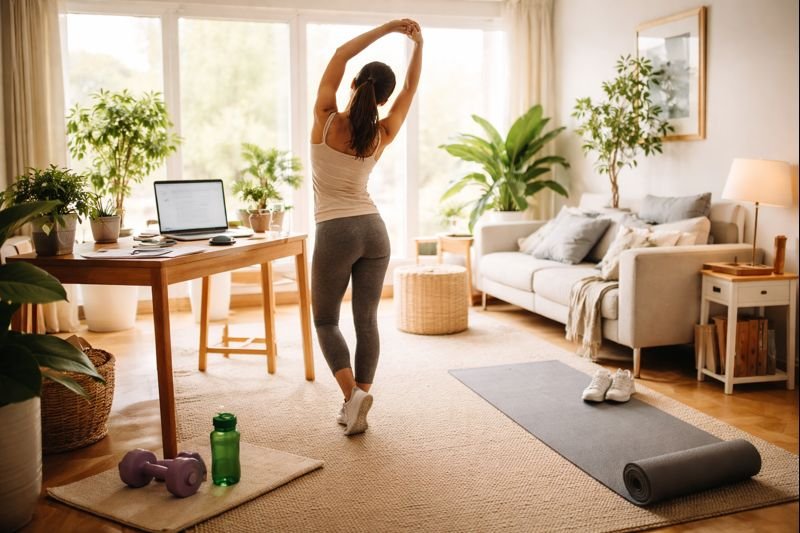
Working from home full-time in 2026 means most of us in the US sit way more than we realize. Even with a dedicated office space or a cozy couch setup, all-day sitting can quietly sap energy, tighten muscles, and make days feel longer than they actually are. After a few months of remote work myself, I noticed I’d go from bed to desk to couch without ever really moving. The habit of “just finishing one more task” replaced anything resembling physical activity, and my body started sending reminders in the form of achy hips and stiff shoulders.
The good news is that staying active when you work from home doesn’t require hour-long gym sessions or expensive equipment. It’s about creating realistic movement patterns, pairing them with routines you already have, and building subtle nudges into your day that keep your body from going entirely dormant. Below are practical, US-focused ways to inject activity into your remote work life with minimal disruption.
Optimize Your Workspace for Movement
Your workspace can either enable movement or trap you in a static posture. Setting up intentionally makes the activity easier.
First, consider a standing desk or a desk converter so you can alternate between sitting and standing throughout the day. Standing periodically burns extra calories, improves posture, and reduces pressure on your lower back. Even standing for an extra 10–15 minutes every couple of hours makes a measurable difference in overall movement volume.
Another low-effort option is active seating. A stability ball or wobble cushion engages your core while you type, keeping your body in subtle motion without interrupting productivity. For those who want to really ramp up steps, an under-desk treadmill or walking pad lets you hit daily step targets during long phone calls or while answering emails.
Little tweaks can make movement unavoidable. Try placing your water bottle, printer, or often-used reference materials in another room. That “awkward” walk becomes a simple way to break up sitting time without thinking about it.
Schedule Movement Breaks Throughout the Day

Movement doesn’t need to be formal exercise; it just needs to interrupt long periods of sitting.
One trick that works for many remote workers is setting an hourly alarm. Every 45-60 minutes, take a five-minute break to stand, stretch, or walk. Even brief movement can reset circulation and clear mental fog. If you’re on a phone-only meeting, grab a wireless headset and walk around your home or backyard. This keeps your body moving while you listen.
Lunchtime is another opportunity. Instead of scrolling through social media after eating, go for a 15-30-minute walk in your neighborhood. Recreating what used to be your commute, whether a walk, jog, or quick bike ride, signals the start and end of your workday, while also helping you hit daily activity benchmarks recommended by national health guidelines.
In those short breaks, try micro-workouts:
- 10-15 chair squats
- 10 desk push-ups
- 15 seated leg lifts
These short bursts stimulate muscle engagement and help maintain strength without requiring formal gym time.
Practice Habit Pairing to Add Movement Naturally
Habit pairing means linking movement to behaviors you’re already doing, so the activity becomes easier to stick with.
For example, while your coffee brews or water heats for tea, do calf raises or counter push-ups. When your screen is loading, fit in a couple of lunges or bodyweight squats. If you’re waiting for a document to download, do a quick stretch routine that targets your hip flexors and the areas around your shoulders that feel tight from prolonged sitting.
You can also turn mundane household tasks into purposeful movement:
- Break up laundry cycles with stairs or lunges between loads.
- Tackle a quick tidy or sweep between big work tasks.
- Play energizing music and do a 2-minute tidy-up dance in the kitchen.
These seemingly small motions add up over a day, keeping your body engaged and reducing that “sitting all day” feeling most remote workers know too well.
Simple Equipment & Exercises You Can Use at Home
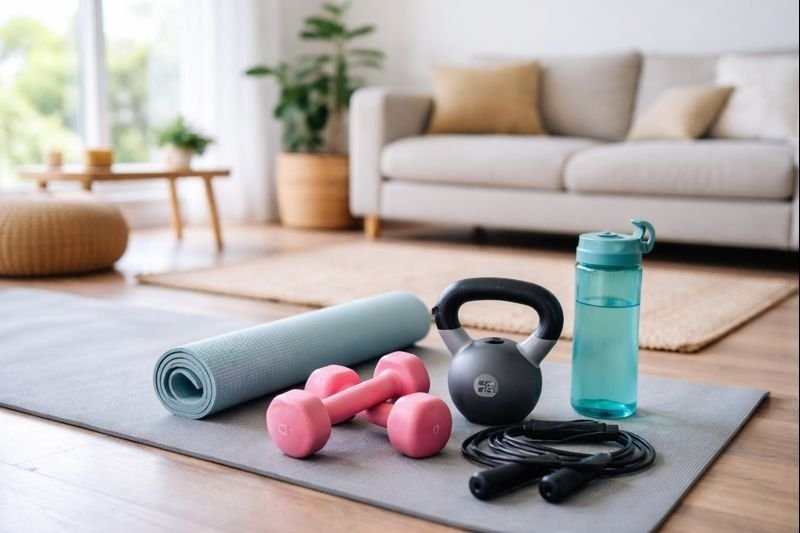
You don’t need a fancy home gym to stay active, just a few versatile tools and movements.
Keep resistance bands near your desk for quick arm and back activation. They’re inexpensive and take up almost no space. A pair of free weights or even large water bottles transform basic curls or shoulder presses into strength-building opportunities during webcasts or slow periods.
Don’t underestimate bodyweight staples either. Push-ups, planks, wall sits, and hip bridges can be done in under a minute and target multiple muscle groups. Integrating just a couple of these throughout your day helps preserve lean muscle and increases calorie expenditure without disrupting work focus.
Leverage Digital Accountability to Stay Consistent
Many Americans working from home use tech to keep themselves on track physically. Fitness trackers like Fitbit, Apple Watch, or Garmin send “time to stand” reminders and track steps, giving you gentle nudges to move when long stretches of sitting creep in.
If competition motivates you, start a virtual challenge with colleagues. Whether it’s steps, movement minutes, or short activity bursts, group accountability via apps or tools like Slack can fuel consistency. Sharing progress or friendly banter about mini-wins builds social support while boosting activity levels.
Why These Small Habits Matter for Your Health

Research clearly shows that prolonged sedentary behavior increases the risk of cardiovascular disease, weight gain, and metabolic issues. Even light movement spread throughout the day, like standing, walking, or brief bodyweight exercises, can reduce these risks and improve energy levels, mood, and focus. By prioritizing movement habits that fit naturally into your day, you sustain your health without feeling like you’re adding extra work to your already busy schedule.
Small moments of activity throughout the day add up. Commit to a few of these habits, adjust as needed, and notice how your energy, focus, and physical comfort improve over time.
Frequently Asked Questions (FAQs)
1. What’s the best way to start moving more when working from home?
Start small: set a timer to stand every hour, add short walks after lunch, and pair movement with tasks you already do (like waiting for your coffee).
2. How often should I take breaks to stay active during remote work?
Aim for a quick movement break every 45-60 minutes. Even 3-5 minutes of stretching or walking helps reduce prolonged sitting effects.
3. Can walking meetings really count toward staying active?
Yes. Walking meetings, especially audio calls with a wireless headset, count as meaningful movement and break up long sitting periods.
4. Do I need equipment to stay active at home?
No. While resistance bands or light weights help, simple bodyweight moves like squats, push-ups, and stretches can keep you active without equipment.
Final Thoughts
Staying active when you work from home doesn’t have to be overwhelming. By optimizing your workspace, scheduling consistent movement breaks, pairing activity with daily habits, and leveraging simple tools and technology, you can significantly reduce sedentary time and build a healthier routine.
In the US, where remote work has become a long-term norm for many, embedding movement into our daily patterns isn’t just good practice; it’s a smart investment in long-term well-being.