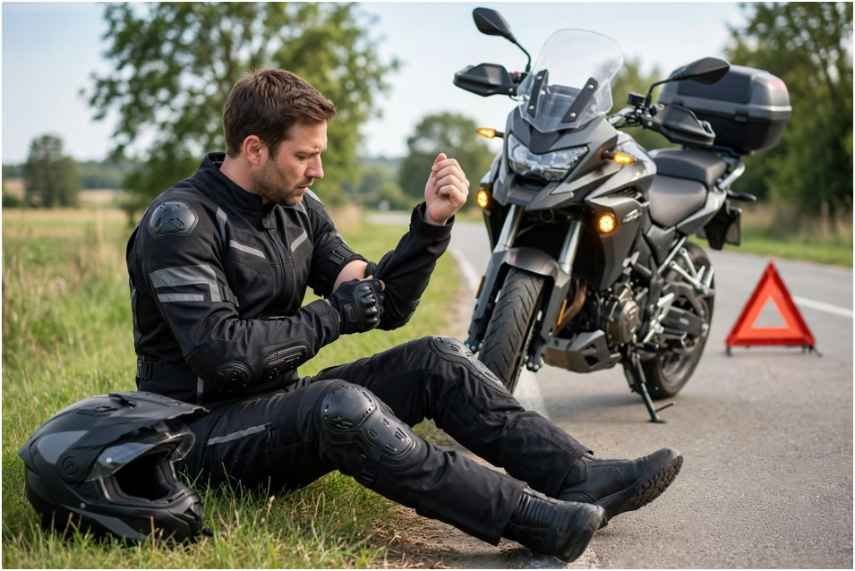
Riding a motorcycle delivers an unmatched sense of freedom, but it also comes with unique vulnerabilities on the open road. Because motorcycles offer minimal structural protection compared to passenger vehicles, even low-speed collisions can feel jarring and disorienting.
In the immediate aftermath of a crash, your adrenaline surges, making it challenging to think clearly or determine your next steps. However, the actions you take in the initial minutes and hours following an incident are vital for safeguarding your physical health, establishing liability, and protecting your legal rights.
To help you navigate the chaos of an unexpected collision with confidence, keep this comprehensive, step-by-step checklist in mind whenever you hit the road.
1. Prioritize Safety and Check for Injuries
The absolute first priority following any vehicle collision is the health and safety of everyone involved. Before letting panic take over, take a deep breath and assess your body for pain, numbness, or visible wounds.
- Move to Safety: If you are physically capable of moving and your current position puts you in danger of oncoming traffic, carefully move to the shoulder or sidewalk. If your injuries are severe or you suspect head, neck, or spinal trauma, remain completely still and wait for medical personnel.
- Signal Hazards: Turn on your hazard lights immediately to alert other motorists, and set up emergency flares or warning triangles if available to prevent secondary crashes.
2. Call Emergency Services (911)

Always contact local emergency authorities immediately, regardless of how minor the collision may seem. Request medical assistance and ask for a police officer to be dispatched to the scene.
A formal police report acts as an objective, third-party record of the event. This document is essential when filing insurance claims or proving liability later. While waiting for officers to arrive, write down their names, badge numbers, and the police report reference number.
3. Document the Scene and Exchange Details

Once you are in a secure position, begin gathering evidence. Memory can fade rapidly after a traumatic event, making immediate visual documentation invaluable.
- Photograph the Scene: Use your smartphone to capture photos from multiple angles. Take pictures of vehicle damage, your riding gear, license plates, road skid marks, traffic signals, and weather conditions.
- Exchange Information: Approach the other driver and calmly collect their full name, phone number, address, insurance provider, policy number, and driver’s license details.
- Gather Witness Info: If any bystanders witnessed the crash, politely request their contact information. Independent witness statements can resolve conflicting accounts later.
4. Arrange Safe Transport for Your Bike
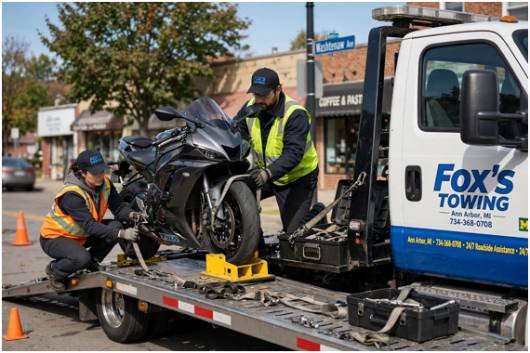
After an accident, a motorcycle may appear functional on the surface while suffering hidden structural, brake, or steering damage. Riding a compromised motorcycle away from a crash scene is extremely dangerous and can lead to secondary accidents or further mechanical damage.
If your bike is rendered inoperable or unsafe to operate, arrange for specialized transport. Utilizing professional motorcycle towing in Ann Arbor or your local area ensures your motorcycle is properly secured using wheel chocks and soft straps, protecting your vehicle from secondary frame or cosmetic damage during transport to a repair facility.
5. Mind Your Words and Avoid Admitting Fault
It is human nature to say “I’m sorry” after a stressful situation, but you must avoid apologizing at an accident scene. Insurance companies or opposing legal teams can easily misinterpret polite statements as a legal admission of guilt. Stick strictly to objective facts when speaking with the other driver, witnesses, and responding officers, and let investigators determine fault based on physical evidence. Get the evidence for a smooth process and know whom to contact to safely sell totaled cars and bikes if necessary.
6. Seek an Immediate Medical Evaluation
Adrenaline is a powerful hormone that masks pain, frequently concealing symptoms of whiplash, internal bleeding, or concussions for hours or even days after impact. Visiting an emergency room or primary care provider immediately protects your physical and mental health and establishes a clear medical record linking your injuries directly to the accident.
7. Notify Your Insurer and Consult Legal Counsel
Report the collision to your auto insurance provider promptly, as most insurance contracts require timely notification. Share the photos, witness details, and police report number you gathered.
Because motorcyclists often face unfair bias from insurance adjusters, consulting an experienced motorcycle accident attorney can ensure your legal rights are protected while you focus on recovery. An attorney can handle complex communications, evaluate the true extent of your damages, and help you secure fair compensation for medical bills, lost wages, and bike repairs.