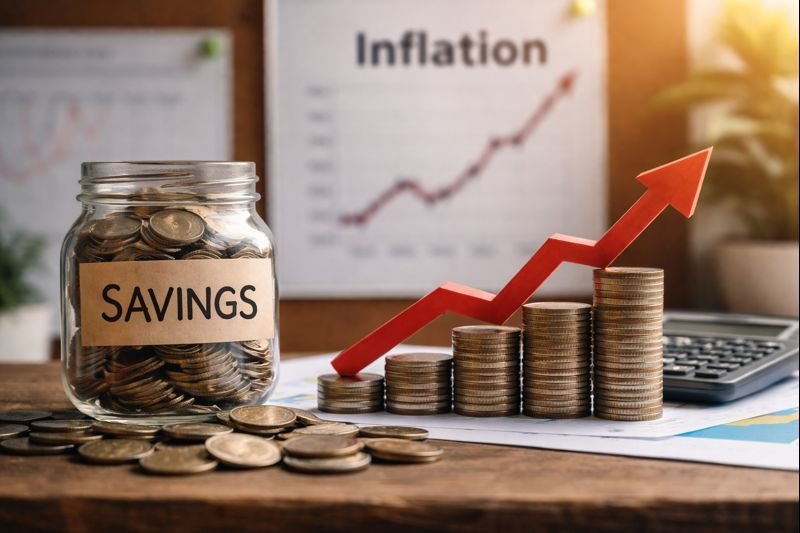
In early 2026, inflation isn’t dominating headlines the way it did a few years ago. Gas prices aren’t spiking overnight, grocery shelves aren’t shocking us every week, and yet something still feels off. Many Americans are doing “fine” on paper, steady income, money in savings, but quietly wondering why that savings doesn’t feel as secure as it used to.
That feeling isn’t imagined. Inflation in 2026 is less dramatic, but it’s persistent. Prices keep inching higher, not enough to cause panic, but enough to slowly chip away at the value of cash sitting still. For households trying to build stability, emergency funds, or long-term security, understanding how inflation affects personal savings in 2026 is no longer optional it’s practical self-defense.
Inflation in 2026: The Quiet Pressure on U.S. Households
By most measures, U.S. inflation in 2026 is expected to stay in a moderate range. The Federal Reserve has largely succeeded in avoiding runaway inflation, but “moderate” doesn’t mean harmless. When inflation hovers around 4 percent, it quietly reduces what your money can actually do.
This matters because many traditional savings vehicles, especially basic checking and low-interest savings accounts, still lag behind inflation. Even some interest-bearing accounts struggle to keep pace once taxes are factored in. The result is a slow but steady erosion of purchasing power, especially for people who believe saving alone is enough.
The impact isn’t evenly distributed either. Inflation hits essentials hardest, and those are the expenses households can’t easily avoid.
Where Savings Lose Ground First

Inflation doesn’t drain savings all at once. It works through everyday pressure points, most of which don’t feel dramatic in isolation.
Healthcare costs remain one of the biggest offenders. Medical inflation in the U.S. continues to outpace overall inflation in 2026, affecting insurance premiums, prescriptions, and out-of-pocket expenses. Education, housing-related services, and food costs also tend to rise faster than the average inflation rate.
This creates a mismatch. Your savings balance may look stable, but what that money covers shrinks year by year. The longer cash remains idle, the more ground it loses.
The Real Math Behind “Safe” Savings
Many Americans still view savings accounts as the safest place for money. Safety, however, doesn’t equal preservation.
If your savings earn around 3 percent interest while inflation runs closer to 5 percent, the math is simple: you’re losing roughly 2 percent of your money’s real value each year. Over time, that gap compounds. What feels like caution quietly becomes cost.
This is one of the clearest examples of how inflation affects personal savings in 2026. The risk isn’t volatility, it’s stagnation.
The Hidden Cost of Idle Cash
Holding cash feels comforting, especially after years of economic uncertainty. But in 2026, large cash balances sitting in non-interest or low-interest accounts are effectively penalized.
Checking accounts, physical cash, and outdated savings products offer little to no protection against rising costs. While they serve short-term liquidity needs, keeping excess funds there guarantees a loss of purchasing power over time.
That doesn’t mean abandoning cash entirely. It means being intentional about how much stays idle and for how long.
Shifting from Saving to Protecting
One of the biggest mindset changes happening in 2026 is the move from pure saving to preservation-focused planning. This doesn’t require aggressive risk-taking, but it does require strategy.
A growing number of households are rethinking where their money sits and why. Emergency funds are being separated from long-term reserves. Short-term needs are handled differently from future goals.
Here’s where many experts suggest starting:
- Placing emergency funds in high-yield savings accounts, Treasury bills, or short-term certificates of deposit that track closer to inflation
- Using inflation-protected securities like Treasury Inflation-Protected Securities to preserve real value
- Avoiding long-term cash hoarding beyond immediate needs
This isn’t about chasing returns. It’s about preventing silent losses.
Real Assets and Long-Term Inflation Resistance
While short-term money needs safety, long-term savings often need growth just to stand still.
Historically, U.S. equities have outpaced inflation over extended periods. Broad market exposure, such as diversified index funds tied to the S&P 500, continues to play a role for savers looking beyond immediate volatility.
Gold also remains relevant in 2026, not as a speculative asset, but as a store of value during prolonged inflationary periods. Real estate and real estate investment trusts often benefit as rents and property values adjust upward with inflation, though they come with their own risks and access barriers.
The key isn’t choosing one asset; it’s avoiding over-reliance on cash alone.
Debt Becomes More Expensive Over Time
Inflation doesn’t just affect savings. It changes the cost of debt.
Variable-rate debt, especially credit cards, becomes more burdensome when inflation lingers. Interest rates may not spike dramatically, but balances become harder to manage as everyday expenses consume more income. For many households, paying down high-interest variable debt offers a guaranteed return that outpaces most savings products.
Reducing debt exposure can indirectly protect savings by freeing up cash flow and reducing future financial strain.
Tracking the Inflation You Don’t See
One of the most overlooked aspects of inflation in 2026 is how subtle it’s become. Price increases are smaller, more frequent, and easier to miss.
Subscriptions quietly rise. Service fees adjust. Insurance premiums creep higher. Individually, these increases feel manageable. Together, they steadily increase monthly burn rates, reducing how much households can realistically save.
Regular financial check-ins matter more now than during periods of obvious inflation spikes.
Frequently Asked Questions (FAQs)
1. How does inflation affect personal savings in 2026, even if interest rates are stable?
Even with stable interest rates, inflation reduces purchasing power when savings returns don’t fully match rising costs. Stable rates don’t guarantee real growth.
2. Are savings accounts still worth using in 2026?
Yes, but primarily for short-term needs and emergency funds. They should be paired with inflation-aware strategies for long-term preservation.
3. What is the safest way to protect savings from inflation?
There is no single solution. A mix of high-yield cash options, inflation-protected securities, and diversified long-term investments reduces risk.
4. Should Americans keep less cash because of inflation?
Not less cash but less idle cash. Keeping only what’s needed for short-term expenses helps limit purchasing power erosion.
Final Thoughts
Inflation in 2026 isn’t loud, but it’s persistent. It doesn’t announce itself with crisis headlines; it shows up in smaller grocery bags, higher insurance renewals, and savings that don’t stretch as far as they used to. Understanding how inflation affects personal savings in 2026 means recognizing that safety isn’t about avoiding risk altogether. It’s about avoiding slow, predictable loss.
The households that adapt aren’t chasing trends. They’re paying attention. They’re adjusting where money sits, how long it stays idle, and what role each dollar plays. In a year defined by quiet pressure rather than shock, awareness becomes the most valuable financial tool.