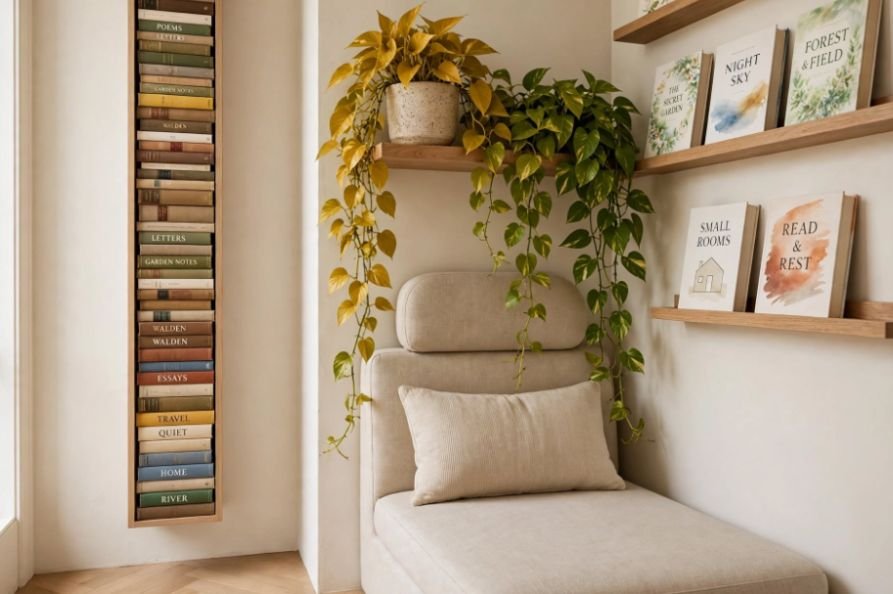
Between back-to-back work calls and endless household chores, I spent years convinced that creative hobbies required wide-open Sunday afternoons. Whenever I waited for a three-hour block of undisturbed leisure, I ended up doomscrolling on the sofa instead. Learning how to start a hobby when you have no free time came down to a stark realization: I did not need more hours; I needed to slash the setup friction.
A fulfilling personal project does not demand a masterclass, an empty calendar, or an attic studio. It requires a fundamental shift toward micro-dosing leisure into the cracks of your existing day.
The Myth of the “Free Weekend” and Why It Stalls Us
We tend to treat leisure like an all-or-nothing investment. We assume that if we cannot paint an entire canvas or practice guitar scales for sixty continuous minutes, starting is pointless. That perfectionist trap guarantees paralysis. According to workplace wellness research published in the Harvard Business Review, expecting substantial blocks of downtime during high-stress periods triggers avoidance behaviors and accelerates chronic burnout.
When you pack every weekday with cognitive demands, your brain treats any complex, high-effort leisure project as just another chore. You defer it to the elusive “free weekend.” When Saturday arrives, decision fatigue catches up, and you default to passive scrolling. Breaking that cycle requires ditching the open-calendar fantasy and adopting satisficing: intentionally choosing the “good enough” five-minute session.
TRADITIONAL HOBBY MODEL MICRO-DOSING MODEL
┌─────────────────────────────────┐ ┌─────────────────────────────────┐
│ Wait for 2-3 Hour Open Block │ │ 5-Minute Micro-Burst │
│ High Activation Friction │ │ Zero Setup / Instant Reach │
│ Outcome: Paralysis & Scrolling │ │ Outcome: Daily Mental Reset │
└─────────────────────────────────┘ └─────────────────────────────────┘
The Friction Formula: Why Setup Kills Leisure
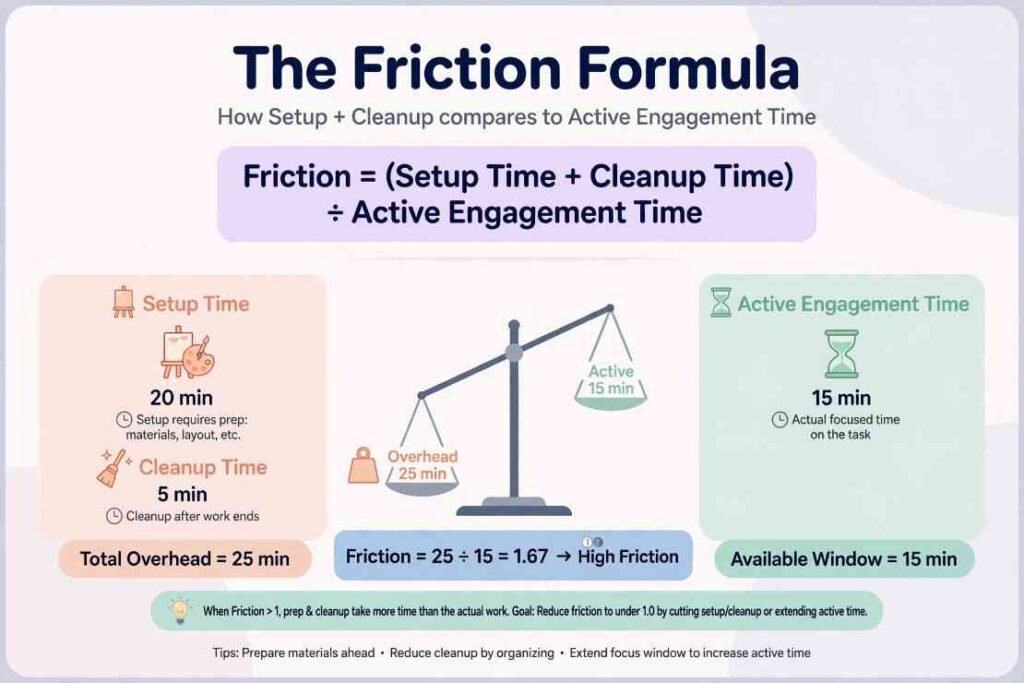
Through months of trial and error, I found that hobby abandonment boils down to a simple mathematical ratio:
FrictionRatio(F)=SetupTime+CleanupTimeActiveEngagementTime
If setting up an easel, mixing paints, and cleaning brushes takes twenty minutes, a fifteen-minute window yields an F score of 1.33. Whenever setup exceeds 50% of your available window (F>0.5), your subconscious triggers an avoidance reflex. To sustain an activity when time is thin, drive that friction ratio as close to zero as possible. The supplies must sit ready, uncapped, and immediately within arm’s reach.
The Micro-Dosing Framework: 5-Minute Tactile Anchors
The American Psychological Association notes that engaging in brief, structured restorative activities resets executive function and breaks negative rumination loops far more effectively than passive screen rest. You do not need an entire evening to gain these psychological benefits; you just need micro-bursts of hands-on engagement.
Habit-Stacking Onto Fixed Daily Chores
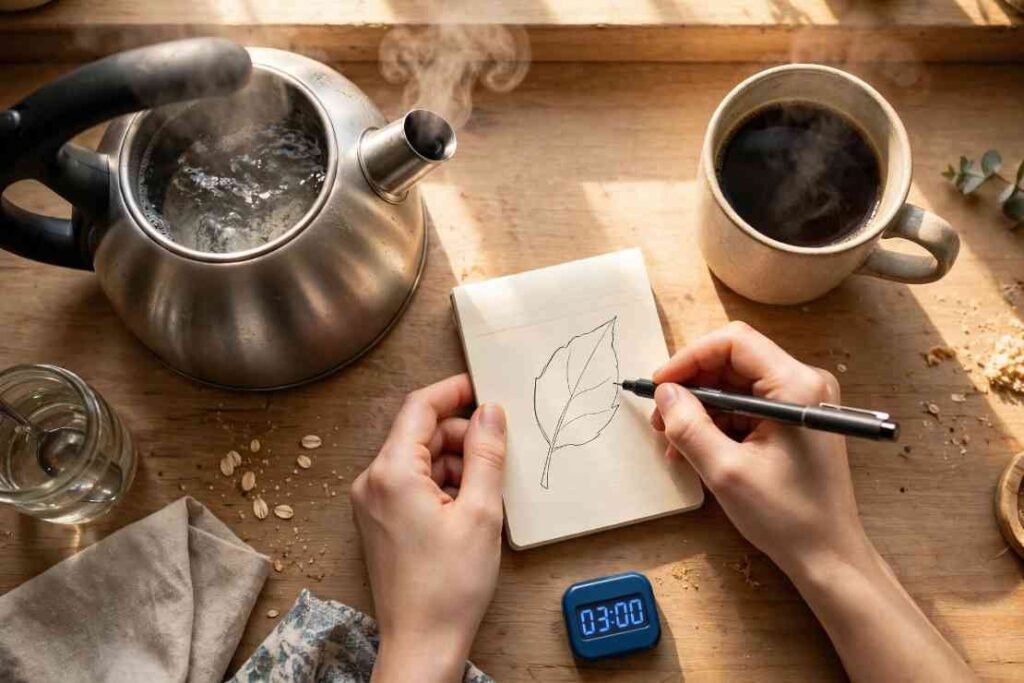
Instead of wrestling open a new slot on your calendar, anchor your interests directly onto obligations you already fulfill without fail. This is habit-stacking.
While waiting for the morning kettle to boil, I spend three minutes hand-sketching a single contour object on a kitchen notepad. While listening to work files render or waiting for large downloads, I complete a solitary chess puzzle.
If you fold laundry or commute by train, stack those periods with narrative history audiobooks or language audio drills. You can even pair these brief periods with intentional solo date ideas right in your living room, transforming an otherwise routine chore window into a dedicated personal date with yourself.
Replacing Screen Friction with Physical Touch
Most people who claim they lack free time actually surrender forty to ninety fragmented minutes a day to reflexive digital browsing. Opening an app requires zero muscular effort, but it floods an already exhausted brain with information overload.
Swapping that phone pick-up for a physical item provides instant tactile grounding. Placing a miniature sketchbook, a set of modeling clay, or a beginner embroidery hoop directly on top of your phone on your nightstand forces a mindful pivot. You redirect those automatic five-minute checking loops toward a tangible, calming physical outlet.
Low-Friction Hobbies You Can Start in Seconds

The secret to keeping a hobby alive when your schedule is packed is picking tactile formats with instant start-and-stop capability. If an emergency phone call or an urgent email pops up, you must be able to set the project down instantly without ruining your progress.
+———————————–+——————–+——————–+
| Hobby Type | Setup Friction | Session Length |
+———————————–+——————–+——————–+
| Pre-Printed Punch Needle | 0 Seconds | 3–10 Minutes |
| Hard Surface Diamond Painting | 30 Seconds | 5–15 Minutes |
| Low-Water Desk Plants (Pothos) | 0 Seconds | 60 Seconds / Week |
| Deep Pressure Sensory Recovery | 0 Seconds | Automatic / Sleep |
+———————————–+——————–+——————–+
Zero-Cleanup Needlecraft and Poke Art
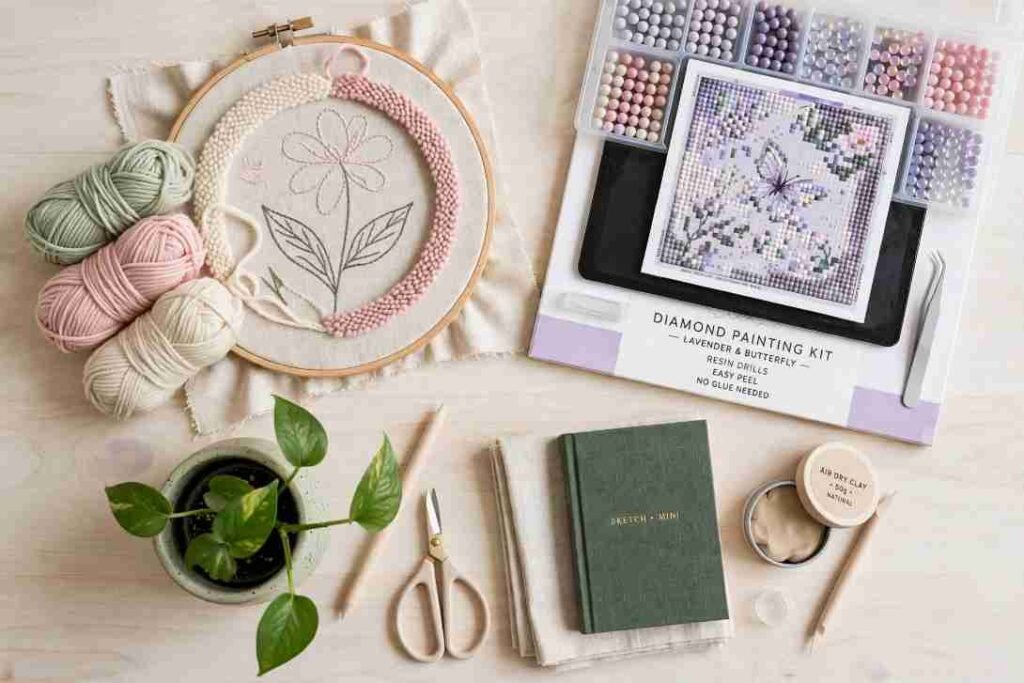
Traditional crafts like wet oil painting or wheel pottery demand extensive cleanup, making them poor choices for packed schedules. Modern punch needle kits and foam-based poke art completely bypass that headache.
Pre-printed punch needle fabric comes pre-stretched on an embroidery hoop with pre-sorted yarn skeins. You push the needle down, pull it up, and create loops. There are no delicate knots to tie, no messy water basins to rinse, and no counting grids. If you have only four minutes before a meeting, you punch twelve loops, lay the hoop flat on your desk, and walk away.
Diamond painting offers a similar structured relief: placing tiny resin drills onto a pre-glued adhesive grid demands zero creative decisions, providing deep satisfaction when your brain is drained.
Passive Greenery and Workspace Plants
If your schedule prevents you from tending an outdoor garden bed, indoor houseplants bring the calming rhythm of nature to you. Hardy varieties like Sansevieria (Snake Plants) and Epipremnum aureum (Golden Pothos) require virtually no maintenance.
These resilient species thrive in indirect office lighting and tolerate irregular watering schedules. Tending to them takes under two minutes once a week. Inspecting a new leaf or checking soil moisture provides a deliberate offline pause during the workday. Setting up two small potted plants while you create a cozy reading nook turns a neglected corner into a calming, plant-filled retreat that requires almost no upkeep.
Downregulating With Deep Sensory Rest
Sometimes, genuine exhaustion makes even simple, low-effort crafts feel overwhelming. During periods of peak burnout, transform your essential passive downtime—like sleeping or resting on the couch—into a restorative hobby focused on sensory recovery.
Using a weighted blanket leverages Deep Pressure Therapy (DPT). Clinical studies indexed on the National Institutes of Health confirm that distributed physical weight promotes vagal nerve tone and shifts the autonomic nervous system out of an overstimulated fight-or-flight state.
Selecting a breathable blanket weighted to roughly 10% of your body weight turns reading or evening rest into an active physiological reset without adding a single item to your schedule.
Reclaiming the Workday Boundary
When working remotely, your professional life easily bleeds into personal hours, creating lingering fatigue. A micro-hobby works best as a deliberate, five-minute sensory bridge at the end of the day.
The moment you close your work laptop, avoid immediately jumping into cooking dinner or checking personal emails. Instead, mark the transition with physical action:
- Stitch, punch, or draw: Spend exactly five minutes on a pre-staged craft sitting right next to your workstation.
- Tend or prune: Trim a yellowing leaf from your desk pothos or wipe down the foliage with a damp cloth.
- Engage the senses: Brew a single cup of loose-leaf herbal tea using a pour-over strainer, paying close attention to the aroma and warmth.
This small ritual acts as a cognitive full stop. It interrupts lingering stress loops and signals to your nervous system that the professional shift is finished.
Frequently Asked Questions About Starting Hobbies With No Time
1. What is the easiest low-maintenance hobby to start at home?
Pre-printed punch needle kits and miniature diamond painting are the easiest because they require zero setup, create no mess, and pause instantly.
2. How do I maintain a hobby with a 60-hour work week?
Anchor micro-sessions of three to five minutes directly to existing routines like morning coffee or your end-of-day computer shutdown.
3. Can five minutes a day on a hobby actually help mental health?
Yes, brief, repetitive physical tasks disrupt cognitive rumination and downregulate daily nervous system stress.
4. What should I do if I feel too exhausted for any creative activity?
Lean into passive sensory rest using breathable weighted blankets or soothing audiobooks that require zero active cognitive output.
Quit Overthinking It: Your Sanity Isn’t a Side Hustle
The greatest threat to picking up a hobby is the modern obsession with turning every personal interest into an optimized skill or a monetized hustle. You do not need to build a shop, cultivate a following, or master an art form to justify doing it.
Leisure is valuable simply because it gives you space to breathe. Leave the unfinished hoop on your desk. Let the succulent sit quietly by your screen. Take five minutes today to do something tactile and delightfully unproductive. Your calendar can spare the five minutes—and your mind sorely needs them.