By midweek, work stress tends to show up in familiar ways. Tight shoulders after back-to-back Zoom calls. A stiff lower back from sitting too long. That wired-but-tired feeling when emails keep coming and your body never really gets a break. For many of us in the US workforce, office-based, remote, or hybrid, stress isn’t dramatic. It’s quiet, constant, and physical.
What actually helped me wasn’t a dramatic lifestyle overhaul or joining a gym I never had time to visit. It was learning how small, intentional movements during the workday could calm my body and steady my mind. The best exercises for reducing work-related stress don’t require equipment, special clothing, or extra time. They fit into real American workdays, between meetings, deadlines, and family responsibilities.
Why Movement Works Better Than “Powering Through”
Stress lives in the body just as much as it lives in the mind. Long periods of sitting, shallow breathing, and screen focus keep the nervous system in a low-grade fight-or-flight state. Gentle movement interrupts that cycle. It increases circulation, releases muscle tension, and sends a signal that it’s safe to relax.
For US workers, especially those clocking eight or more hours at a desk, this matters. You don’t need intense workouts to reset stress levels. Consistent, low-impact movement does the job, especially when paired with intentional breathing.
Desk Exercises You Can Do Without Anyone Noticing
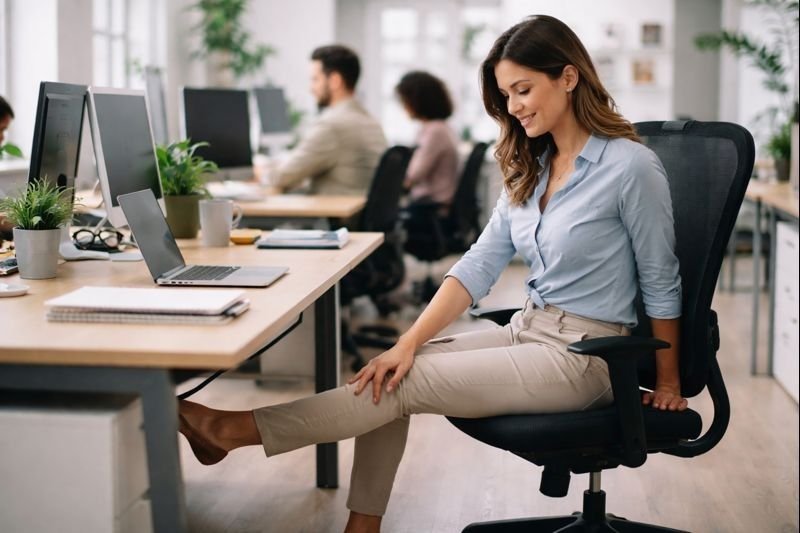
These desk exercises for stress are subtle enough to do during calls or focused work. They target the areas where stress usually settles first.
Seated spinal twists are one of the simplest ways to decompress the spine. Sit upright with both feet on the floor, place one hand on the back of your chair, and gently rotate your torso. Hold for about 20 seconds before switching sides. This helps release tension in the lower back and mid-spine after long sitting periods.
Seated cat-cow movements bring gentle motion to the spine. Rest your hands on your knees. Inhale as you arch your back and lift your chin, then exhale as you round your spine and tuck your chin. Five to ten slow rounds can noticeably loosen stiffness and calm your breathing.
Seated leg extensions improve circulation, especially helpful if you sit for long stretches. Straighten one leg, hold briefly, and lower it back down. Alternating legs keeps blood moving and reduces that heavy, sluggish feeling in the lower body.
Wrist and forearm stretches matter more than people think. Extend one arm forward, palm up, and gently pull the fingers back with your other hand. This counters hours of typing and mouse use and can reduce tension that travels up into the shoulders.
Standing Desk Movements That Reset Your Energy
Standing up alone already helps, but adding controlled movement makes it more effective. These office stretches for tension work well during short breaks.
Desk push-ups are an easy way to engage the upper body without getting sweaty. With hands on the edge of a sturdy desk, step back and lower your chest toward your hands. Even ten controlled reps can release stress held in the chest and shoulders.
Wall sits activate large leg muscles, which helps burn off nervous energy. Slide your back down a wall until your knees form a right angle. Holding this position for 30 to 60 seconds strengthens your legs and surprisingly sharpens focus.
Standing calf raises are simple but effective. Holding the back of a chair for balance, rise onto your toes and slowly lower down. This improves circulation and helps counter stiffness from long periods of sitting.
Breathing and Mindfulness That Actually Fits the Workday

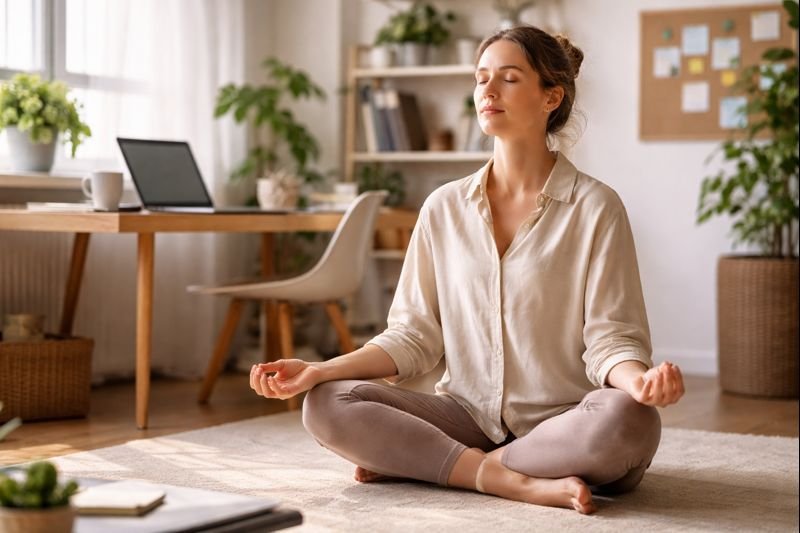
Not all stress relief needs movement. Sometimes the fastest reset comes from breathing. Breathing exercises for work stress are especially useful during high-pressure moments.
The 4-7-8 breathing technique works well before presentations or difficult conversations. Inhale for four seconds, hold for seven, and exhale for eight. This longer exhale tells your nervous system to slow down.
Box breathing is another powerful option. Inhale, hold, exhale, and hold again, each for four seconds. Many professionals use this technique to regain mental clarity during intense workdays.
Progressive muscle relaxation helps when stress feels trapped in the body. Starting at your feet, gently tense a muscle group, then release it before moving upward. This practice increases awareness of where you’re holding tension.
The 20-20-20 rule supports both eye health and mental breaks. Every 20 minutes, look at something 20 feet away for 20 seconds. It sounds simple, but it gives your brain a brief pause from constant screen focus.
Short Movement Breaks That Don’t Disrupt Your Schedule
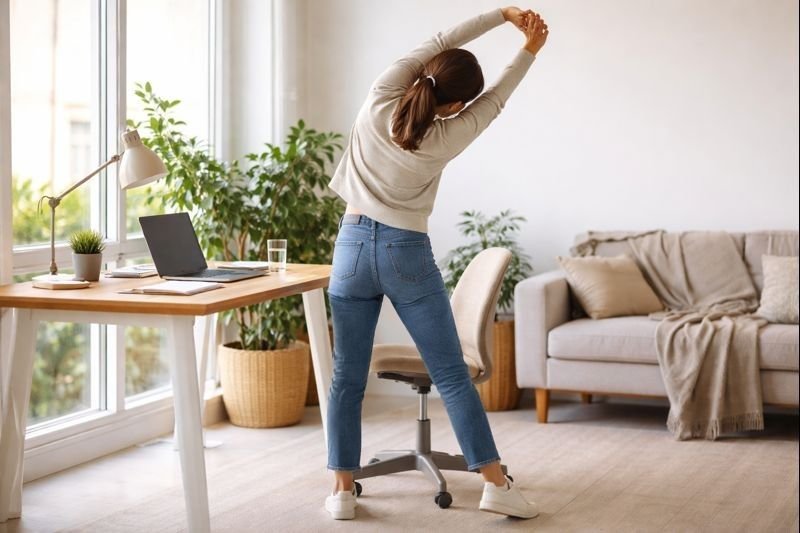
One of the most effective quick stress relief exercises is walking. A five- to ten-minute brisk walk around the office or outside can dramatically shift your mood. Turning it into a walking meditation by focusing on each step helps ground your attention in the present moment.
Shoulder and neck rolls are also underrated. Slowly rolling your shoulders backward five to ten times releases tension caused by screen posture and “tech neck,” a common complaint among US desk workers.
How to Make These Exercises Stick
The biggest mistake people make is treating stress-relief movement as optional. The reality is that consistency matters more than intensity. Linking movement to existing habits after meetings, before lunch, or when switching tasks makes it easier to maintain.
Most people don’t need more motivation. They need permission to take small breaks without guilt. In the long run, these best exercises for reducing work-related stress protect your energy, focus, and overall health far better than pushing through exhaustion.
Frequently Asked Questions (FAQs)
1. Are desk exercises really effective for reducing stress?
Yes. Desk-based movement reduces muscle tension, improves circulation, and helps regulate breathing. Over time, this lowers physical stress signals sent to the brain.
2. How often should I take movement breaks during work?
Every 45 to 60 minutes is ideal for most US workers. Even two to five minutes of movement can make a noticeable difference.
3. Can breathing exercises help during high-stress meetings?
Absolutely. Techniques like box breathing and 4-7-8 breathing can be done silently and provide fast nervous system regulation.
4. What if I work from home with limited space?
Most of these exercises require only a chair, a wall, or a small open area. They’re well-suited for home offices and apartments.
Final Thoughts
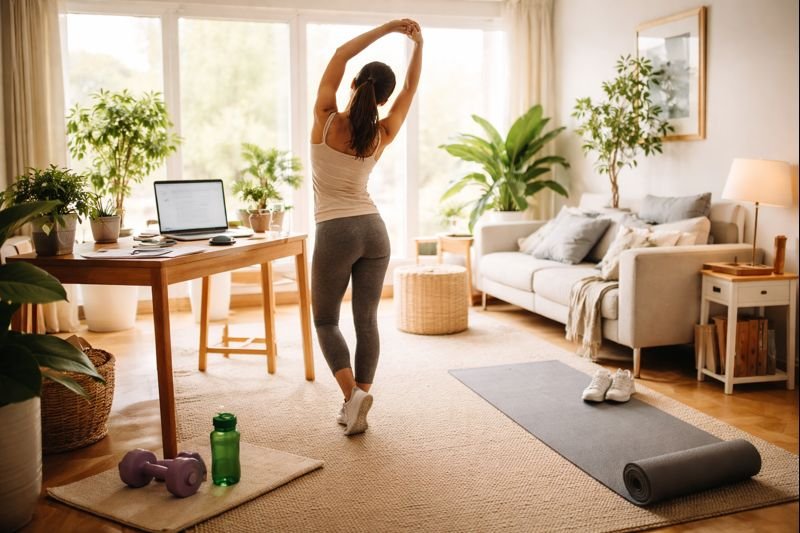
Work-related stress doesn’t disappear just because we ignore it. It settles into the body, quietly shaping how we feel at the end of each day. The real shift happens when movement becomes part of how we work, not something we squeeze in afterward. Small exercises, done consistently, create space for your body to reset and your mind to breathe.
You don’t need perfect routines or extra equipment. You need moments of awareness and movement woven into your day. That’s where sustainable stress relief begins.