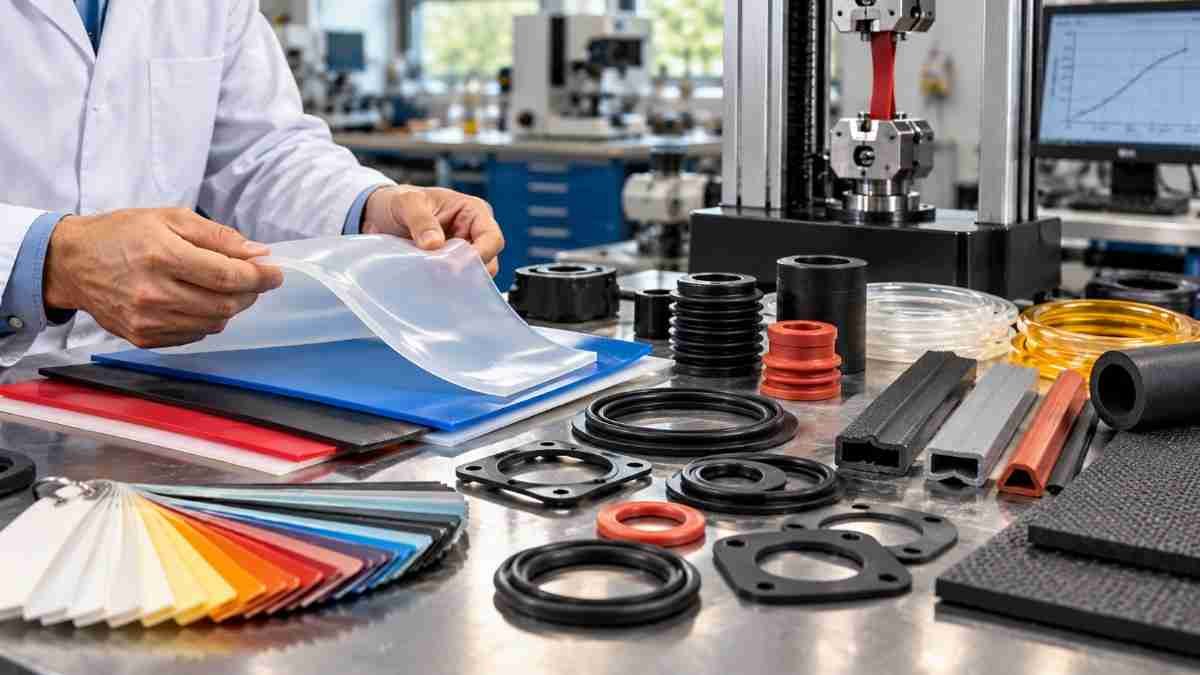
Designing products from flexible materials—such as silicone, polyurethane, thermoplastic elastomers, rubber, and flexible foams—presents a unique set of engineering challenges that differ significantly from rigid plastics or metals. Unlike rigid components that maintain predictable geometry under stress, flexible parts stretch, compress, bend, and distort during normal operation.
Successfully bringing flexible products to market requires a thorough understanding of material properties, manufacturing limitations, structural support, and real-world environmental exposure. By addressing these critical design considerations early in the development lifecycle, product teams can ensure functional performance, long-term durability, and cost-effective manufacturing.
Material Selection and Mechanical Behavior Analysis
Choosing the right flexible substrate is the foundational step in designing a successful product. Flexible materials vary wildly in Shore hardness, tensile strength, tear resistance, and elastic memory. Engineers must evaluate whether the application requires a thermoset silicone, a thermoplastic elastomer, or a specialized rubber compound.
Consider the mechanical loading conditions the part will experience throughout its operational lifespan. Is the component subjected to repeated dynamic stretching, static compression under a load, or continuous flexing? Understanding physical properties like compression set—the permanent deformation remaining after compressive force is released—is vital for applications like seals, gaskets, and shock absorbers.
Additionally, evaluate tactile requirements, durometer hardness ratings, and tear propagation resistance. A material that feels comfortable against human skin may lack the tear resistance necessary to prevent catastrophic failure near stress concentration points, requiring a careful balance between user ergonomics and mechanical durability.
Understanding Durometer Hardness and Tactile Flexibility
Durometer scales measure the indent resistance of elastomers, helping designers select the optimal balance between physical squishiness and structural support.
Choosing the correct durometer ensures gasketing components seal tightly without requiring excessive assembly force. Hardness selection dictates mechanical sealing efficiency.
Evaluating Elastic Recovery and Compression Set Resistance
High compression set resistance prevents rubber seals from permanently flattening over time, ensuring continuous fluid protection across dynamic temperature cycles.
Testing elastic memory under simulated operating loads guarantees component resilience over long usage periods. Material recovery safeguards product longevity.
Accommodating Manufacturing Tolerances and Processing Methods
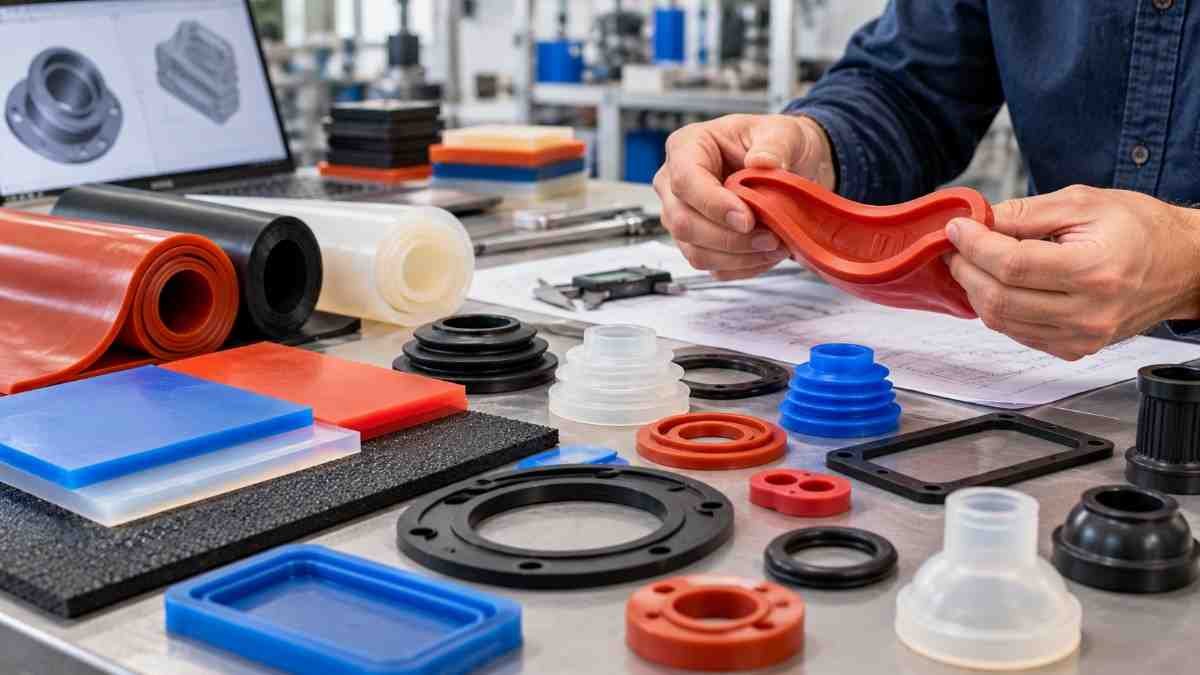
Flexible materials do not behave predictably during manufacturing processes such as injection molding, extrusion, or die cutting. Because flexible substrates expand, shrink, and deform easily, achieving the hyper-tight dimensional tolerances typical of rigid metals is challenging and often unnecessary.
Designers must select manufacturing methods tailored to the material’s physical behavior and the part’s geometric complexity. For flat gaskets, seals, and multi-layer adhesive components, utilizing precision die cutting delivers crisp edge profiles, high dimensional repeatability, and rapid high-volume output while minimizing material waste across sensitive flexible rolls.
Work closely with manufacturing partners to establish realistic tolerance standards that account for thermal shrinkage during cooling and physical deformation during handling. Designing overly tight tolerances on flexible parts inflates manufacturing scrap rates and drives up production costs without offering functional benefits.
Establishing Realistic Dimensional Tolerances for Flexible Parts
Designing part dimensions with appropriate tolerance bands accommodates natural material shrinkage and flexibility during high-speed production runs.
Overly restrictive tolerances increase manufacturing rejection rates without improving part function. Realistic tolerances optimize production yield.
Designing Part Features for Mold Release and Ejection
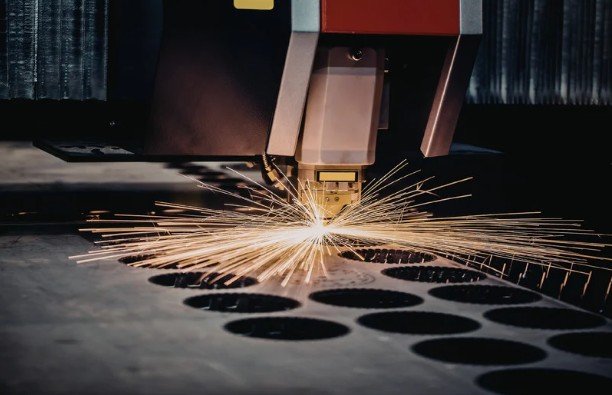
Flexible molded parts require adequate draft angles and uniform wall thicknesses to prevent tearing or distortion when ejected from steel tool cavities. Explore the fiber laser machine advantage in precision metal fabrication.
Incorporating generous corner radii reduces localized stress concentrations during tool stripping. Thoughtful mold design accelerates cycle times.
Managing Stress Distribution and Preventing Tear Failure
Flexible materials are particularly vulnerable to tear initiation and propagation when subjected to sharp tension, bending, or twisting forces. A minor notch, sharp interior corner, or microscopic edge imperfection can quickly develop into a full structural tear under moderate physical load.
To mitigate tear risks, eliminate sharp internal corners across all design geometries, replacing them with generous fillets and smooth transition radii. Fillets distribute physical stress evenly across larger surface areas, preventing localized force concentration that initiates material failure.
Furthermore, reinforce high-stress zones, mounting hole perimeters, and flex points with increased wall thickness or embedded rigid inserts. Designing gradual transitions between thick and thin sections prevents stress concentration along geometric step-downs, extending total product fatigue life.
Incorporating Fillets and Radii to Eliminate Stress Concentrators
Replacing sharp interior angles with smooth, rounded fillets distributes tensile loads broadly across flexible wall structures.
Rounded geometry prevents micro-tears from forming at stress points during cyclic bending. Generous radii maximize physical durability.
Reinforcing Mounting Holes and Flexing Hinges
Adding extra wall thickness or molded ribs around bolt holes prevents flexible flanges from tearing during mechanical installation.
Gradual thickness transitions prevent localized stress peaks along active flex zones. Structural reinforcement preserves mechanical integrity.
Environmental Resistance and Chemical Compatibility
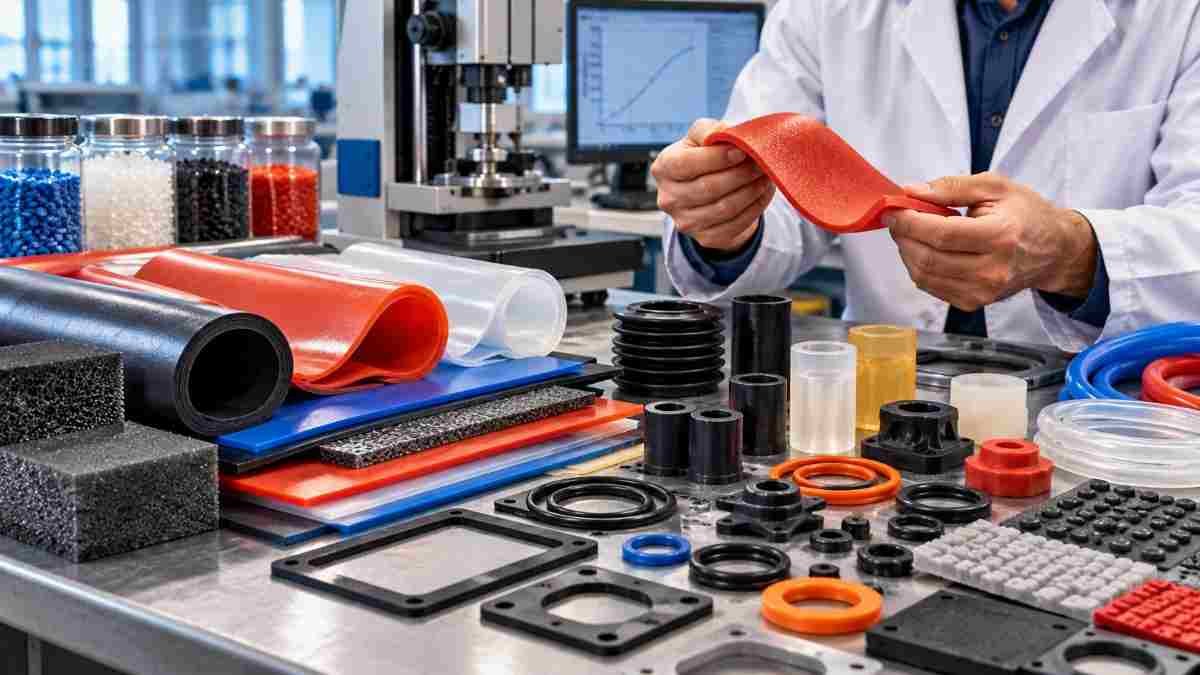
Flexible materials often operate in challenging environmental conditions where exposure to extreme temperatures, ultraviolet radiation, ozone, chemicals, and moisture can degrade physical properties rapidly. A material that performs flawlessly at room temperature may stiffen, crack, or dissolve when exposed to operating environments.
Evaluate the complete environmental exposure profile of your end-use product. Silicone offers exceptional thermal stability across extreme high and low temperatures, while materials like nitrile or fluoroelastomers excel in environments requiring chemical and oil resistance.
Additionally, outdoor applications require materials formulated with UV stabilizers and ozone inhibitors to prevent surface cracking and premature embrittlement. Selecting a chemically compatible, weather-resistant polymer ensures long-term functional stability in harsh environments.
Assessing Thermal Operating Ranges and Material Stiffening
Extremely low temperatures cause flexible polymers to reach their glass transition point, rendering soft seals brittle and prone to cracking under impact.
High heat accelerates polymer chain breakdown, causing softening or permanent hardening over time. Thermal testing validates material stability.
Ensuring Chemical, Oil, and Moisture Resistance
Exposure to industrial fuels, cleaning solvents, or bodily fluids can cause unsuited elastomers to swell, lose tensile strength, or soften severely.
Selecting chemically inert compounds prevents seal degradation and maintains structural dimensions during fluid contact. Chemical testing guards against failure.
Designing Structural Assemblies and Fastening Strategies
Because flexible materials deform easily under pressure, joining them to rigid components—such as metal housings or hard plastic enclosures—requires specialized assembly techniques. Traditional threaded fasteners can over-compress and distort flexible flanges, leading to uneven sealing pressure and physical leaks.
Utilize mechanical retention features, such as interlocking tabs, tongue-and-groove joints, or captured channels, to retain flexible gaskets and grips securely without relying solely on point-contact fasteners. Distributing clamping force evenly across continuous mating surfaces prevents localized pinch damage.
When using adhesives to bond flexible components to rigid substrates, choose flexible adhesive formulations that match the elongation characteristics of the elastomer. Rigid adhesives will crack and delaminate when the flexible substrate stretches, ruining bond strength during thermal cycling.
Distributing Clamping Force on Soft Sealing Flanges
Designing rigid backing plates or compression-limiting collars prevents threaded bolts from over-compressing and crushing soft rubber gaskets.
Uniform compression distribution maintains continuous seal contact along the entire flange perimeter. Controlled clamping prevents fluid leaks.
Selecting Elongating Adhesives for Flexible Bonding
Flexible acrylic and silicone adhesives stretch alongside soft substrates without losing bond line adhesion or tearing away from rigid housings.
Matching adhesive elongation to substrate flexibility prevents edge peeling during dynamic thermal expansion. Compatible adhesives secure multi-material bonds. Discover how to launch a high-end brand through superior product quality.
Ergonomics, Tactile Response, and Aesthetic Finishes
For consumer products, medical devices, and wearable electronics, the tactile experience of a flexible material heavily influences user perception of product quality. The feeling of a soft-touch grip, the responsiveness of a flexible button pad, or the drape of a wearable strap directly drives user satisfaction.
Design tactile features—such as button travel distance, tactile feedback domes, and grip textures—with user interaction in mind. Incorporating molded surface textures like stippling or fine ribbing improves grip security, hides manufacturing sink marks, and prevents soft materials from feeling sticky against human skin.
Furthermore, consider color matching and surface finishing capabilities. Adding custom color pigments, matte coatings, or anti-dust surface treatments enhances visual appeal while preventing lint and debris from clinging to tacky silicone surfaces.
Designing Tactile Feedback in Flexible Button Keypads
Optimizing wall geometry and web thickness in silicone keypads creates a satisfying snap response during user activation.
Engineered tactile feedback confirms button presses without requiring excessive finger force. Tactile design improves user experience.
Applying Anti-Dust Coatings and Molded Surface Textures
Coating soft silicone parts with specialized matte topcoats eliminates surface tackiness, preventing dust and pocket lint accumulation.
Molded textures enhance wet and dry grip security while disguising minor surface imperfections. Surface finishing elevates visual quality.
Conclusion
Designing successful products from flexible materials requires a holistic engineering approach that balances material chemistry, mechanical stress analysis, manufacturing tolerances, environmental durability, and assembly strategy. By understanding how soft substrates stretch, deform, and recover under operating loads, product teams can prevent tear initiation, maintain fluid seals, and deliver comfortable tactile user experiences.
Accounting for processing methods like precision die cutting and molding limitations early in development eliminates costly tooling redesigns and production delays. Embracing the unique behavior of flexible materials transforms physical compliance into a powerful competitive advantage, enabling the creation of innovative, durable, and high-performing products across medical, industrial, and consumer markets.