Coming home to flat surfaces covered in unopened mail, stray chargers, and laundry piles destroys focus. A demanding work week drains mental energy; your living space should not demand the rest. Most organizational advice fails because it relies on willpower, marathon weekend deep cleans, and constant tidying rituals.
I tested and refined minimalist home organization hacks for busy professionals to solve this exact bottleneck. By replacing subjective chores with automated structural constraints, my home stays orderly by default.
Re-Engineering the Entryway: The Two-Minute Drop Zone Rule
Clutter follows a predictable migration path from the front door to the kitchen counter. Researchers at the Princeton Neuroscience Institute discovered that multiple visual stimuli compete for neural representation in your visual cortex, directly restricting your capacity to process information. When you cross your threshold holding work passes, transit cards, and deliveries, decision fatigue causes you to drop them on the nearest horizontal plane.
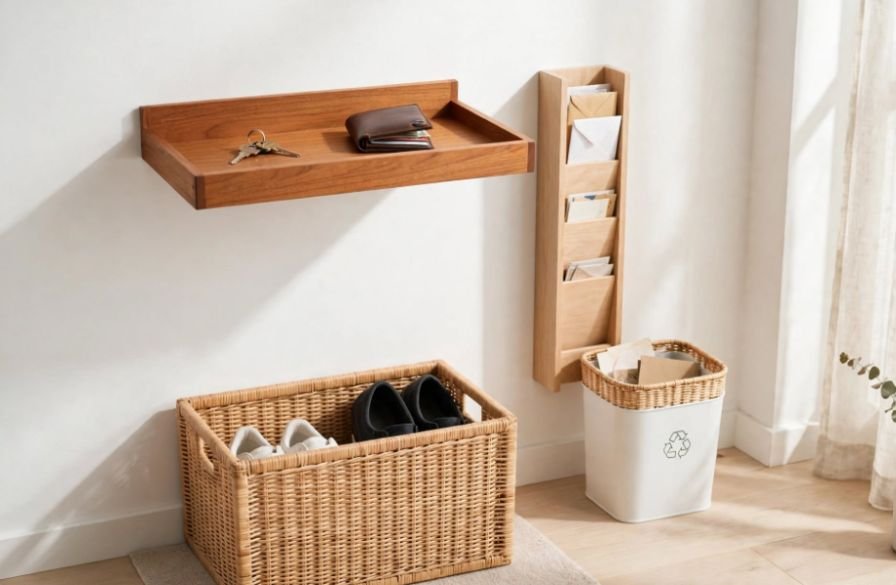
I solved this by establishing a non-negotiable two-minute drop zone inside the door. This zone consists of a wall-mounted teak catch-all and an open bin directly below it.
Eliminating Flat-Surface Paper Friction
Mail never moves past my entryway unread. I mounted a slim recycling bin directly beneath the mail rack. Catalogs, junk flyers, and packaging inserts drop into the bin before my shoes come off. Important bills and tax forms slip into a single desktop sorter that I batch-process once every two weeks. Containing paper clutter at the boundary prevents flat surfaces in the living room and kitchen from becoming storage zones.
Vertical Space Architecture: Maximizing Tight Square Footage
Floor space dictates how open a home feels. Bulky bookcases and wide consoles crowd walkways, creating immediate cognitive drag in compact apartments. When floor space hits its practical limit, shift your storage architecture upward.
Ceiling Line —————————————————
[ 12″-Deep Floating Perimeter Ledge ] <- Out-of-season
light storage
Sightline ——————————————————
[ Clear, Unbroken Sightlines ] <- Low visual noise
Floor Line —————————————————–
Floating Perimeter Storage Above Eye Level
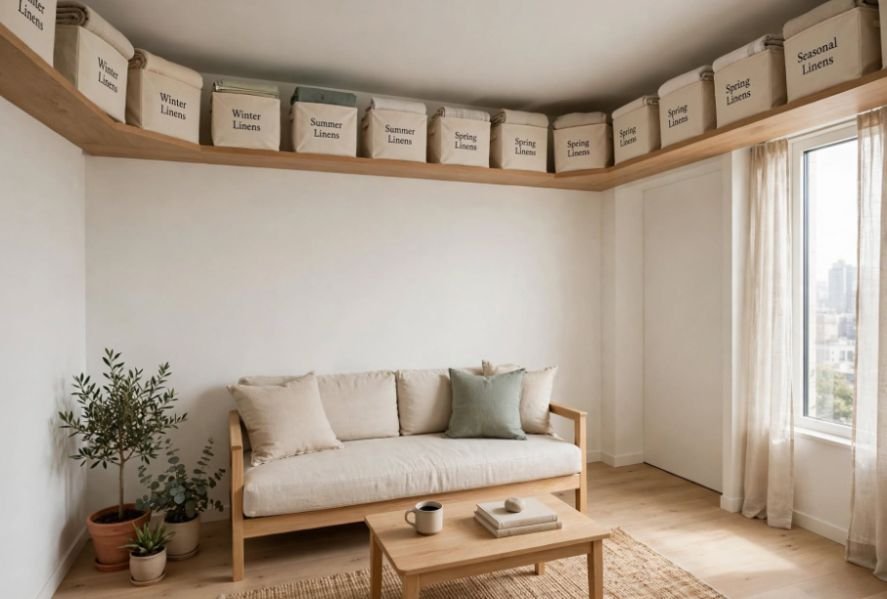
I installed single floating ledges 12 inches below the ceiling line along unused structural walls. As highlighted in space design analyses on Architectural Digest, drawing the eye upward expands perceived room volume while preserving physical floor clearance.
I place matching canvas bins on these high perimeters to house seasonal linens, archival records, and travel packs. Because the storage sits well above eye level, the main visual field stays calm.
For living areas, swap wide bookcases for slim vertical spine towers. Stacking books and media vertically preserves walking paths and keeps walkways clear. This functional floor clearance allows room to create a cozy reading nook in a small space using a single armchair and an anchored wall sconce.
Designing an Invisible Work-from-Home Command Center
A remote workspace must balance equipment readiness with clean surfaces. Stacking paperwork, docking stations, and excess cords around your screen creates chronic background distraction throughout the day.
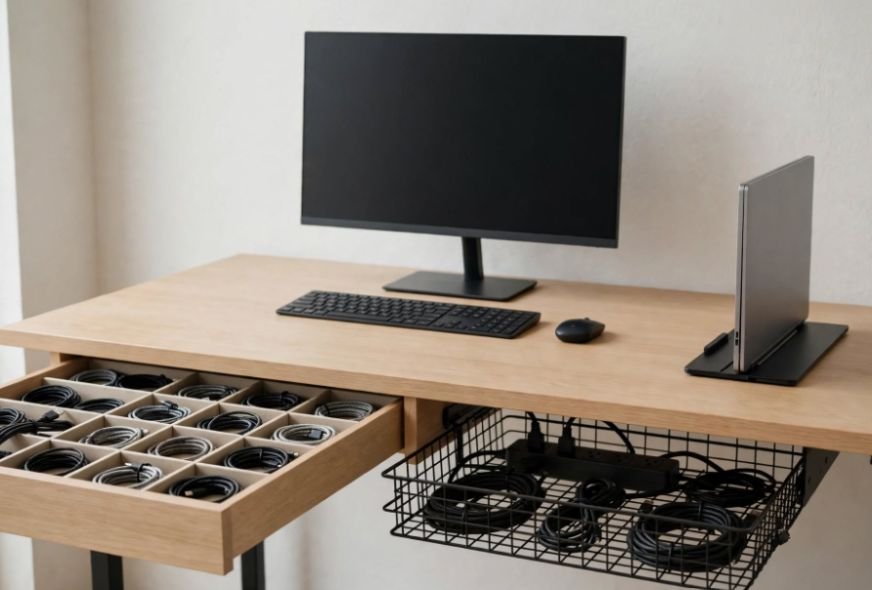
I stripped my primary desk down to the active monitor, mouse, and keyboard. Everything else lives in dedicated under-desk drawers organized with shallow modular bins.
Minimalist Drawer Matrix
| Zone 1: Daily Essentials | Zone 2: Peripherals |
| Pens, notebook, desk card | SSDs, adapters, flash drives |
| Zone 3: Power Management | Zone 4: Work Hardware |
| Short braided USB cables | Ergonomic mouse, headset |
Modular Cable and Tech Containment
Cables are the fastest route to visual disorder. I mounted a metal wire-management tray beneath the desk frame to hold power strips, heavy power adapters, and long cords.
I use 6-inch braided cables in place of factory 6-foot cords for desktop peripherals. Drawer divider trays prevent chargers, thumb drives, and hardware dongles from tangling. When work ends, the laptop docks into a vertical stand behind the screen, clearing the desk surface completely.
The Closed-Storage Protocol: Preventing the Multi-Functional Trap
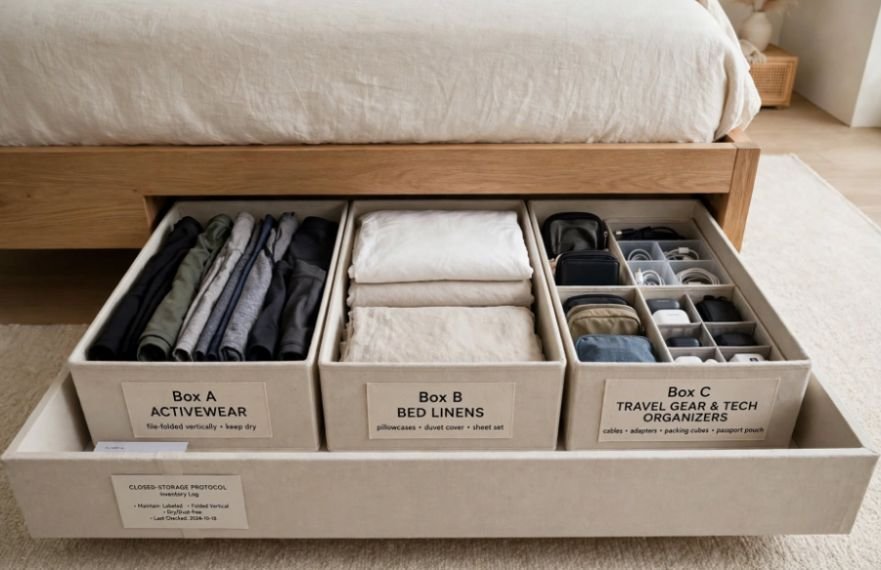
Multi-functional furniture is practical for smaller homes, but it introduces an operational risk. Deep storage ottomans, storage bed frames, and console tables frequently degrade into hidden catch-alls where loose items get lost.
Rigorous interior compartmentalization makes closed furniture functional. Lab-tested home evaluations from Wirecutter highlight that rigid, structured storage dividers double spatial utility compared to open, unstructured bins.
Inside my under-bed drawers, I use rigid fabric boxes to organize items:
- Box A: Spare activewear and technical apparel, file-folded vertically.
- Box B: Bed linens and pillowcases pressed into compact folds.
- Box C: Travel gear, tech organizers, and adapters.
Segmenting deep drawers prevents items from sliding into a jumbled heap whenever you slide the frame open.
Organic Minimalism: Bringing Warmth Without Adding Clutter
A functional minimalist home does not need to look like an empty art gallery. Stripping away all organic textures can leave an apartment feeling stark and sterile.
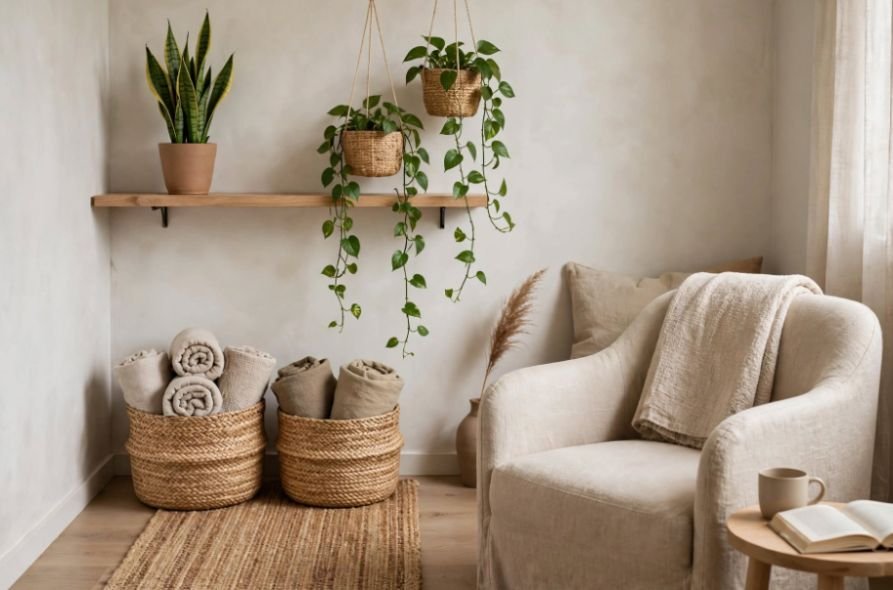
Integrate natural textures that serve functional purposes instead of displaying decorative dust collectors. I use woven seagrass baskets to contain rolled throw blankets and jute entry runners to trap floor grit.
Elevated plants soften clean corners without occupying usable desk or counter space. Mount a wall-anchored shelf above your workspace or suspend pots using ceiling hooks. Selecting resilient, low maintenance indoor plants like snake plants or trailing pothos brings vibrant greenery indoors while demanding minimal watering and care during busy project weeks.
| System Category | Target Object | Applied Solution |
| Entryway Management | Mail & Daily Carry | Wall drop tray |
| Vertical Real Estate | Out-of-season gear | High perimeter shelf |
| WFH Workspace | Cables & accessories | Under-desk wire rack |
| Dual-Purpose Furniture | Linens & apparel | Segmented bins |
| Natural Decor | Desktop surfaces | Suspended planters |
Frequently Asked Questions
1. How do I stop paperwork from accumulating on my counters?
Install an entryway mail sorter with an attached recycling bin to sort incoming post before it reaches common living areas.
2. What is the most effective way to store small electronics?
Store cables and peripherals in shallow, divided desk drawers using braided cords to eliminate cord tangles.
3. How can I make a minimalist apartment feel warm without extra clutter?
Incorporate natural materials like jute, woven rattan, and elevated hanging plants that keep desks, countertops, and floors clear.
4. Where should out-of-season items be kept in small floor plans?
Store seasonal items in structured, labeled canvas bins placed on high-perimeter wall ledges or in under-bed drawers.
Ditch the Weekend Reset: Your Blueprint Starts Tonight
Spending your weekend recovering your living space from five days of work chaos is a design failure, not a personal one. When your physical space relies on passive systems rather than manual willpower, cleanliness maintains itself.
Creating a home that practically maintains itself can also free up time for personal interests outside work. If a packed schedule has made it difficult to pursue something enjoyable, start with small, manageable activities rather than waiting for an entirely free day. Explore how to start a hobby when you have no free time for practical ways to make room for hobbies in a busy routine.
Choose one pain point—your entryway, your desk cables, or your under-bed storage—and install structural barriers today.