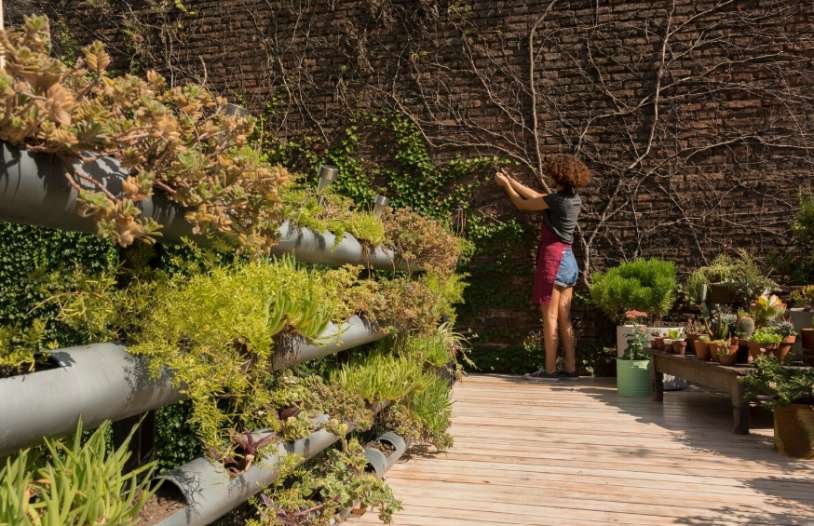
Great outdoor spaces rarely come together by accident. The best ones feel intentional because every element supports the others: the patio fits the way people gather, the planting softens the structure, and the hardscaping gives the whole space definition and durability.
When those pieces are planned separately, the result often feels fragmented. A beautiful patio can still feel exposed. A planting bed can still look disconnected from the house. A fire feature can still seem like an afterthought. Strong landscape design solves that problem by treating the yard as one coordinated environment, not a collection of add-ons.
Why Outdoor Living Fails When It Is Planned in Pieces
Many outdoor projects start with a single idea. A homeowner wants a dining patio, or a pool area, or a better front entry. That is understandable, but it is also where design quality can slip. If the outdoor living area is planned without considering drainage, circulation, plant structure, and material transitions, the finished space may function poorly even if it looks attractive at first.
The issue is not just aesthetics. It is performance. A patio placed in the wrong location can overheat in summer. A planting plan chosen without regard to irrigation or sun exposure can struggle to establish. A retaining wall built without a broader master plan can solve one slope problem while creating another visual imbalance elsewhere.
Southern Landscape’s value comes from approaching these projects as connected systems. Since 1982, the firm has focused on coordinated landscape design in Austin, Texas, along with architecture, construction, and property in the Texas Hill Country. That matters because this region demands more than generic solutions. It requires judgment about grade changes, soil conditions, drainage, masonry, and how people actually use outdoor spaces over time.
The Hidden Cost of Uncoordinated Design
A disconnected yard usually reveals itself in small ways first. Walkways do not align naturally with seating zones. Planting screens block views that should have been framed. Hard edges feel too abrupt. The space may technically have all the right components, but it lacks flow.
The longer-term cost is even more important. Redoing sections of hardscaping because the layout was off from the start is expensive. Replacing stressed plantings is frustrating. Correcting irrigation after construction is finished can be invasive. Good design-build work avoids those mistakes by making one plan govern all the parts from the beginning.
The Strategic Role of Hardscaping in the Overall Composition

Hardscaping does more than create patios and walkways. It sets the structural grammar of the landscape. Stone, masonry, decking, retaining walls, and steps establish boundaries, movement, and visual weight. Without that framework, planting beds can feel loose and outdoor rooms can lose definition.
In a well-composed project, hardscaping is not just functional infrastructure. It is the part of the landscape that helps the eye understand where to go and how to move through the space. That is especially important in outdoor living areas, where people need clear transitions between cooking, dining, relaxing, and circulation zones.
Southern Landscape works in this architectural mode. The firm’s in-house teams include masons, welders, carpenters, irrigators, and landscapers, which allows the built elements to be coordinated rather than handed off between disconnected contractors. That kind of workflow is especially valuable when a project includes custom stonework, pergolas, outdoor kitchens, fireplaces, or integrated poolscaping.
Materials Should Support Both Beauty and Use
The right materials do more than look good in a portfolio. They need to handle heat, use, maintenance, and the visual scale of the property. A patio surface that feels too busy can compete with the planting. A retaining wall that is too dominant can overwhelm the house. A pergola that is undersized can leave the whole seating area feeling incomplete.
Good design balances these pressures. It chooses materials that support the architecture of the home and the experience of being outside. In practice, that means looking at proportions, textures, edge conditions, and the relationship between built form and open space.
Planting Is What Makes the Structure Feel Alive
Hardscaping gives a landscape strength. Planting gives it rhythm, softness, and seasonal change. Without planting, outdoor living spaces can feel too rigid or exposed. Without hardscape, planting can feel uncontained or unfinished. The most successful projects use both in deliberate proportion.
Planting also carries practical responsibility. In Central Texas, plant selection needs to reflect heat, exposure, irrigation strategy, and long-term growth patterns. A design that ignores mature size or water requirements can create maintenance problems later. A thoughtful planting plan prevents that by matching species to the site and giving them enough room to thrive.
Southern Landscape’s design-build approach is useful here because planting is not treated as a decorative final step. It is part of the initial master plan. That makes it easier to shape privacy, define sight lines, and create a natural transition between the built elements and the broader property.
Planting Softens the Architecture Without Weakening It
The best planting schemes do not hide the hardscape. They frame it. A hedge can make a patio feel more private. Layered shrubs can reduce the visual hardness of a retaining wall. Trees can cast scale and shade over a large open area. Groundcovers can tie broad stone surfaces back to the soil and make the whole composition feel grounded.
That interplay matters in landscape design. Homeowners often want outdoor entertaining. The goal is not to make the yard look wild or overly formal. It is to make it feel composed, comfortable, and usable.
Outdoor Living Works Best When Design Thinks Like a Floor Plan
A strong outdoor living space behaves like an extension of the home. It should have circulation, focal points, and functional zones that make sense together. That is why serious landscape design starts with use patterns, not just style preferences.
For example, an outdoor kitchen should connect logically to the dining area. A fireplace should create a gathering point without blocking movement. A pool deck should have enough room to move, rest, and transition without crowding. Even a simple seating nook benefits from being oriented to shade, views, and privacy.
Southern Landscape’s structured five-step process—Consultation, Design, Refine & Budget, Build, Maintain—reflects that kind of planning discipline. The use of 3D color mock-ups helps clients see how the living area, planting, and hardscape will work together before construction begins. That reduces guesswork and makes design decisions more strategic.
What Strong Operators Look At Before Building
A good design team studies more than the wish list. It evaluates:
- How people enter and move through the space
- Where sun, shade, and heat create comfort or discomfort
- How planting can support privacy, framing, and scale
- What hardscape materials will best fit the property
- How irrigation and drainage will affect long-term performance
Those considerations are what separate a visually appealing project from one that still works five years later. The most durable landscapes are usually the ones that looked simple only because the planning was rigorous.
Why Design-Build Produces More Coherent Results

When design and construction are separated, the project can lose continuity. A concept may be strong, but details can shift during handoff. Materials may change. Dimensions may be adjusted. Installation decisions may drift from the original intent. By the time the work is finished, the result can feel less resolved than expected.
Design-build reduces that risk by keeping accountability under one roof. That is especially important for custom outdoor environments, where the line between architecture, horticulture, and craftsmanship is thin. With one team managing the process, the project has a better chance of staying aligned from concept through completion.
For homeowners comparing options, this is one of the most important distinctions in landscape design. A design-build partner is not just selling drawings or labor. It is managing the relationship between ideas and execution.
Southern Landscape presents that model clearly through its long-standing Austin practice and its end-to-end service structure. The company also supports post-build property care through a dedicated maintenance division, which matters because outdoor spaces only stay strong when they are cared for after installation.
The Real Measure of Quality Is What Happens After Installation
A landscape does not peak on installation day. It matures. Plantings establish. Materials weather. Irrigation needs adjustment. Seasonal use reveals what the original plan got right and what it missed. A premium landscape firm understands that the job is not finished when the last stone is set.
That is why maintenance belongs in the same conversation as design and construction. The best outdoor environments are built with their future condition in mind. They are designed to age well, not just photograph well.
A Better Outdoor Space Starts With a Single Coherent Vision
The strongest landscapes are not assembled from separate ideas. They are composed. Outdoor living, planting, and hardscaping each play a distinct role, but they only reach their full value when they are designed together. That is the difference between a yard with features and a landscape with purpose.
For homeowners who want that level of coordination, Southern Landscape offers a credible model: local experience, in-house craftsmanship, design-build accountability, and long-term care. If you want to explore that approach further, learn more about Southern Landscape and how thoughtful planning can turn separate elements into one well-built outdoor environment.
In the end, the best landscapes do not ask you to choose between beauty and function. They make both feel inevitable.